


Foot fungus is one of the most common types of diseases caused by parasitic fungi.In medical practice, there are several types of this pathology.It is important to identify foot fungus early in its development.It will then be possible to get rid of them more quickly and easily.In this case, no special treatment will be necessary, much less surgery.For mild manifestations of fungal activity, it is enough to use antifungal ointments or baths according to traditional recipes.
Mushroom and its varieties
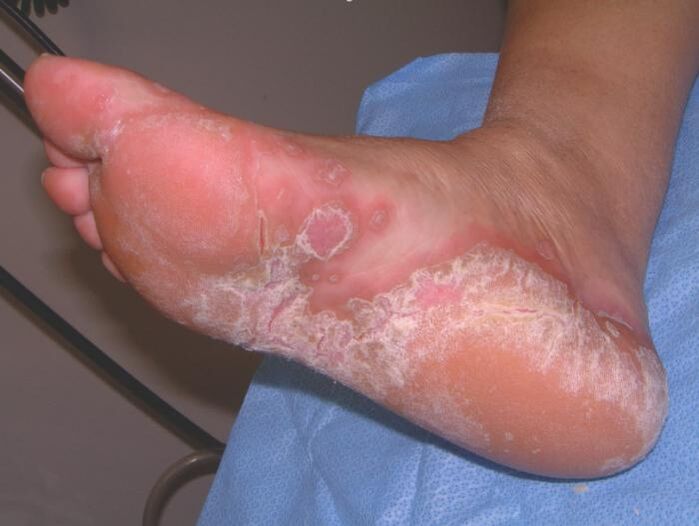
Despite the sufficient prevalence of fungi that affect the feet, not all infected people know what foot fungus looks like.
Here are the main types of fungal infections:
- Scaly or scaly.
- Intertriginous.It is characterized by the diaper rash type of skin.
- Hypertrophic, atrophic and normotrophic onychomycosis.The difficulty in treating these diseases lies in the fact that all varieties can be combined with each other.
- Dyshidrotic.Marked by disruption of the sweat glands.
At different stages of development, this pathology looks different.Foot fungus is the common name for two diseases: athlete's foot and rubromycosis, the development of which occurs in the same way.
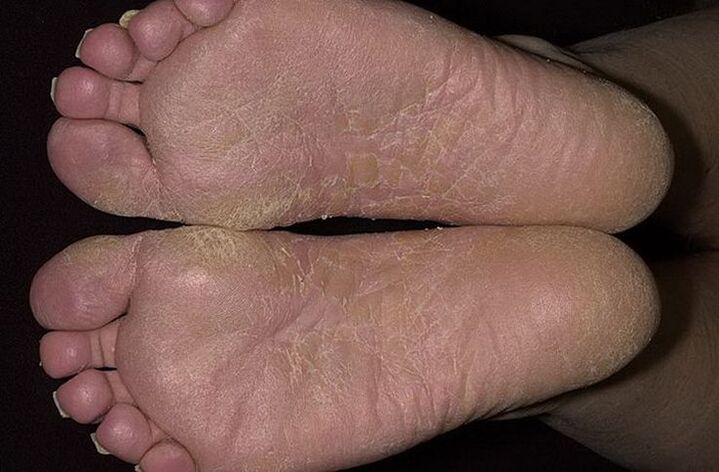
Scaly mycosis
At the initial stage, the fungus manifests itself as lesions on one foot, and after a while the disease spreads to the other.
The skin turns red and then peels.The area of redness varies from patient to patient and depends on the stage of development.Many people are not even bothered by itching in the affected area;the skin may not peel off.That is why they turn to a dermatologist only when the legs are affected by the last stage of the disease.
Dyshidrotic fungal infection
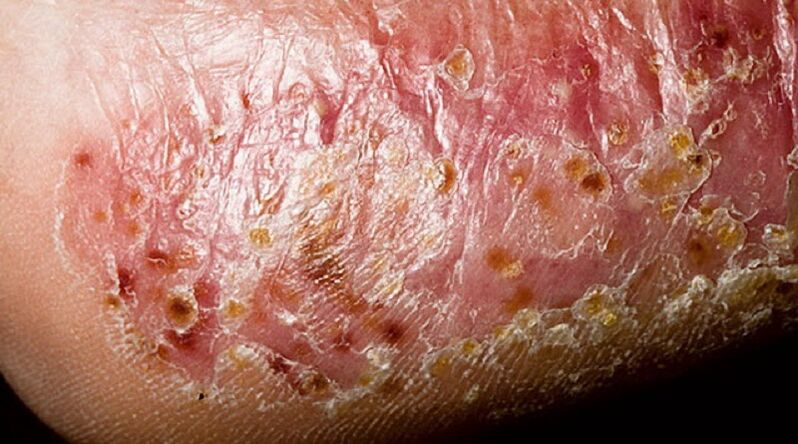
Anyone who suspects the occurrence of this disease should know what a foot fungus looks like, regardless of its form of development.This pathology is characterized by the appearance of miniature bubbles on the arch of the foot.Very little time passes and they combine to turn into large blisters, the shell of which quickly breaks and superficial damage to the skin becomes visually noticeable.
The pathology can extend to the entire leg with the appearance of areas of diaper rash.In this case, the patient begins to itch and feel pain.Once everything is healed, peeling begins.
The most unpleasant disease is the formation of bacterial fungi.In this case, cloudy fluid and pus flow from the ruptured blisters.At this stage of development of the pathology, a slight increase in temperature and unbearable pain is observed.The skin on the feet swells.
The process of the dyshidrotic form of mycosis can last several months.Periods of improvement in the condition of the feet alternate with relapses.
Intertriginous fungus
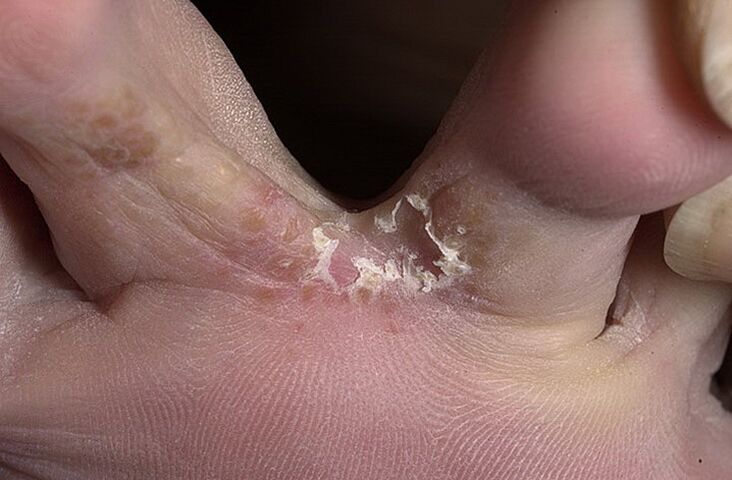
This type of fungus on the skin of the feet is the most common.It appears independently or in association with the scaly form of the pathology.The disease manifests itself as cracks on the skin, around which a white rim forms, and then the skin begins to peel off.The space between the fingers becomes wet.The patient feels itching and burning.Superficial skin defects appear, accompanied by intense pain.
The protective functions of the skin are reduced and it becomes looser.This makes it easier for streptococcal infections to penetrate the skin.Purulent inflammations appear, characterized by redness, itching, swelling and severe pain.
Intertriginous fungus is most often characterized by a long-term chronic course of the pathological process.In winter the pain usually subsides, but in summer it gets worse again.
Onychomycosis or nail fungus
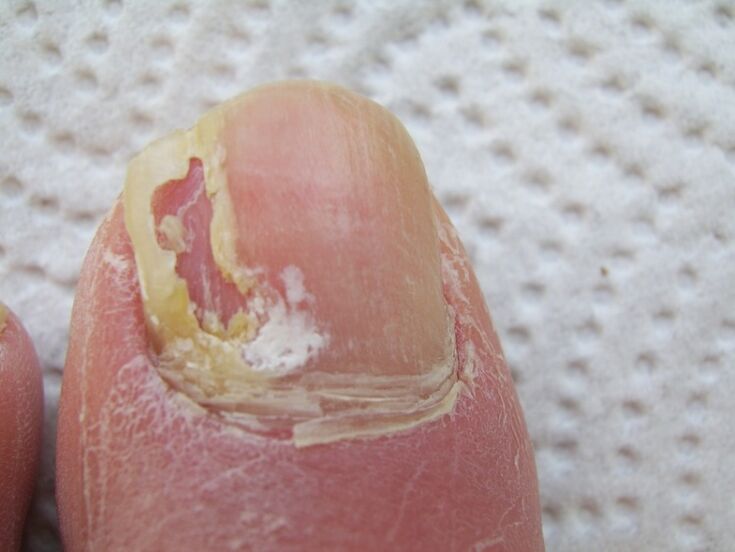
When the first signs of the disease appear, the patient's task is to promptly contact a dermatologist who will determine how to eliminate the fungus on the feet.
Nail onychomycosis is a more dangerous disease than foot fungus, because it takes much longer to heal.
Types of fungal infections affecting the nail plate:
- Atrophic onychomycosis.First, the nail thins and then collapses.
- Hypertrophic onychomycosis.The thickness of the nail increases and acquires a yellow color.Growth in length stops.The nail plate begins to crumble and peel off.
- Onychomycosis caused by mold.This pathology does not develop independently.It usually develops against the background of other diseases.In this case, the nail plate can be painted in any color, from black to green.The periungual fold often becomes inflamed.
In its advanced form, the disease affects the entire body and even penetrates the internal organs.Pathological changes often begin to develop from the edge of the nail plate.First, scratches, spots and other “patterns” appear.
Treatment methods
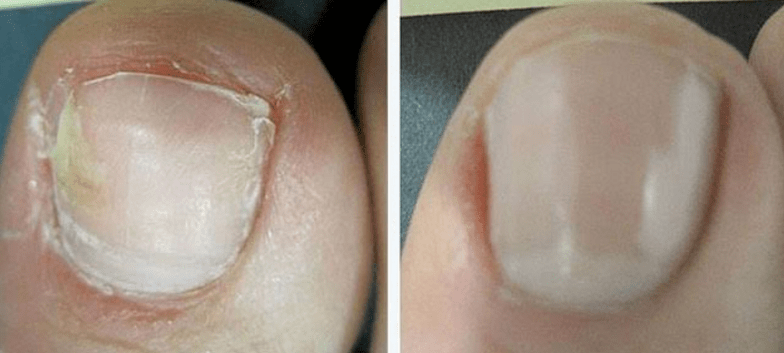
Not all patients know how to remove fungus from their feet, but dermatologists do.Treatment mainly involves blocking the development of a fungal infection.To prevent reinfection of the feet with fungi, complex treatment is used:
- External therapy course.Antifungal ointments, creams and sprays are used in the treatment.
- Treatment using antifungal medications.
- Use of antihistamines.They are taken in case of severe itching and increased sensitivity to irritants causing allergies.
- A course of therapy with vitamins and minerals.
- Antibacterial drugs.They are used in cases of bacterial infection of the body.
After consulting a doctor, a person will learn how to treat fungus on nails, heels and between toes.In advanced forms of the disease, the doctor usually prescribes complex treatment consisting of taking pills and using ointments.Systemic drugs are prescribed to patients who have already undergone a severe course of the process.
To treat a fungal infection of the legs at home, use the following folk recipes:
- Wine vinegar.Due to its antiseptic properties, wine vinegar is used for baths.
- Salt and soda.They are dissolved in water in equal quantities and made into baths that help eliminate foot fungus.
- Oak bark, calendula inflorescences, blackberries.The affected areas of the feet are washed with a decoction of these medicinal herbs.
The most effective is the complex treatment of the fungus using ointments and drugs with various pharmacological effects.Treatment will never be necessary if you listen to the recommendations of doctors and periodically apply preventive measures.
Antifungal medications
Fungi of the feet and interdigital spaces are eliminated using effective fungicidal drugs.
Since the fungus can manifest itself in any form, an effective remedy to combat this infection should be chosen by a specialist.Some medications are toxic and can cause side effects;they are taken under the strict supervision of a doctor.A quick positive result of treatment depends on the correct diagnosis not only of the disease, but also on the stage of its development.